DNA testing may seem futuristic, but it is based on modern science. By analyzing your genetic code, these tests reveal important insights into your health risks and predispositions. However, DNA is only part of the story.
Your genes interact with lifestyle, environment, and daily habits to shape your well-being. While DNA testing provides helpful guidance, it should be combined with these factors to make informed choices and support a healthier life.

Scientists and robotic devices work in a top-of-the-line, technologically advanced laboratory in Beijing, China. They focus on human DNA analysis to understand how human genes impact health and destiny, while observing data and notes on tablets and smartphones to optimize research outcomes.
What is DNA Testing and How It Predicts Your Health?
Instead of using astrological signs, a DNA horoscope uses your genetic data. Your DNA holds key information about your body and health. They can analyze your DNA to see which diseases or conditions you are at risk for. It’s like astrology, except instead of stars, it focuses on the building blocks of life your genes.
Astrology, which examines planets and stars, is a completely different beast from a DNA horoscope, which uses biology to predict health effects. It’s about things like your disease risk, how your body responds to specific foods, and how many years you might have left. It’s a new way to better understand how your body works.
How DNA Testing Works: The Science Behind DNA Testing and Its Impact on Health
DNA tests look at the genetic information in your cells. Each person has a distinct code of DNA, which consists of small variations. The differences can alter how your body functions, including how you respond to certain foods, medications and even stress. Some of these genetic differences are associated with diseases.
Some genes, for instance, are linked to a higher risk of cancer or heart disease. A DNA test can display these variations and help determine if you are predisposed to certain health problems. But genetics don’t tell the full story of your future health. Lifestyle and environmental factors are also significant.
How DNA Testing Helps Identify Health Risks through DNA Horoscopes
DNA tests can tell you quite a lot about your health. What are some things they can predict? Here are some examples:
- Heart Disease: Differences in certain genes can help determine your risk of heart. These include genes associated with cholesterol levels and blood pressure.
- Diabetes: Certain genes are associated with an increased risk of developing Type 2 diabetes. A test can tell whether you’re a candidate to develop this condition.
Your metabolism is influenced, in part, by your genes. It is easier for some people to put on weight; others may find it difficult to shed. These insights can lead you to take action. You may, for instance, adopt lifestyle changes or start preventive treatments earlier in life.
Limitations of DNA Testing in DNA Horoscopes
DNA testing is not perfect. It cannot guarantee what will happen to your health. Some diseases may run in families because of shared genes, but they do not necessarily predict the outcome. Your lifestyle, diet, and environment all play a major role. A person with a genetic push toward heart disease, for example, can still escape it with proper lifestyle changes.
Conversely, a person without the genetic risk might still get heart disease if they fail to look after their health. And our grasp of genetics is still developing. Genetic factors are still being discovered by scientists as new links to health conditions are discovered. That means that today’s DNA tests might not hold all the answers and that we might discover more in the future.

Top-tier and fully equipped laboratory, scientists work with laptops and microscopes to investigate the limitations of human DNA testing in the context of human DNA horoscopes. One scientist prepares to take notes in a spiral notebook, while another examines samples under a microscope. The microscope features a movable upper structure with lenses that can be tilted downward, removed and replaced in the same position, and adjusted laterally, illustrating advanced technology. Nearby, another laboratory instrument designed for biological analyses allows the scientist to use the microscope’s high-precision lenses to examine samples in this adjacent device, showcasing cutting-edge equipment advancing research in genetic analysis and personalized insights.
The Role of DNA Testing in Personalized Medicine
Personalized medicine is a rapidly evolving field that tailors medical treatments to an individual’s unique genetic makeup. Unlike the traditional one-size-fits-all approach, this method offers greater precision and effectiveness.
For example, if a genetic test reveals a predisposition to cancer, healthcare providers may recommend more frequent screenings, lifestyle adjustments, or even preventive treatments. By analyzing your DNA, personalized medicine enables the development of a customized health plan designed specifically for your genetic profile, helping you take proactive control of your health.
Ethical Implications of DNA Testing
DNA tests have a lot of advantages, but they do come with some disadvantages. One issue is privacy. Who owns your genetic data? Could insurers or employers use this information against you? Another concern is how this information might impact your mental well-being. When receiving DNA tests, it is important to have support counseling so that you can handle the emotional impact of the results.
Ethical questions also surround the use of genetic data. Should your genes be given to other people. Is it acceptable for them to be used for research without your consent? These are critical questions that we must answer as genetic testing continues to be used at an increasing rate.
Genes and the Environment (Epigenetics)
This makes sense, since epigenetics has shown that the way our genes are expressed can be influenced even changed by diet, lifestyle, and environment. Unlike permanent genetic changes, these changes are reversible. Certain genes can be turned on or off by things like stress, exercise, and diet. In fact, flipping through those pages shows your health isn’t just encoded in DNA each day’s decisions matter.
Environmental factors can affect, as well, how genes are expressed, from pollution to chemicals. Even aspects of sleep patterns and emotional health can impact it. Our health can be sculpted and enhanced by tuning the gene expression to benefit us by practicing better habits and indelible well-being practices to push us away from the treadmill of diseases.

In a highly advanced laboratory in Stockholm, Sweden, scientists examine a cutting-edge robot while researching human DNA. Their work focuses on understanding genetic challenges and how human genes interact with lifestyle, diet, and environmental factors to advance genetics research and improve health. Epigenetics reveals that gene expression can be influenced—and even reversed—by stress, exercise, diet, sleep, emotional health, pollution, and chemical exposure, meaning daily choices play a crucial role in shaping well-being and reducing disease risk.
The Promise and Peril of Genetic Editing
Genetic editing, like CRISPR, would help scientists fix or change genes to prevent diseases. While this could cure genetic disorders, it raises enormous questions. Are we going to edit human DNA? Would it pose unintended risks, such as mutations or ethical concerns over “designer babies´´.
These technologies also bring up issues of fairness and accessibility—who will get access to them, and are they being used responsibly? The potential benefits coming from these are enormous, but we need to treat them carefully, and we need to regulate their application in a way that is not dangerous.
How Is Gut Health Related to Your Overall Health?
DNA testing plays a crucial role in personalized medicine, a growing field that tailors medical treatments to an individual’s genetic makeup. Unlike the traditional one-size-fits-all approach, personalized medicine uses genetic information to guide decisions about prevention, diagnosis, and treatment.
For example, if a genetic test reveals a predisposition to cancer or an autoimmune disease such as lupus or rheumatoid arthritis, healthcare providers may recommend earlier and more frequent screenings, lifestyle changes, or even preventive therapies. By analyzing your DNA, doctors can create a customized health plan designed to optimize outcomes and reduce the risk of disease.
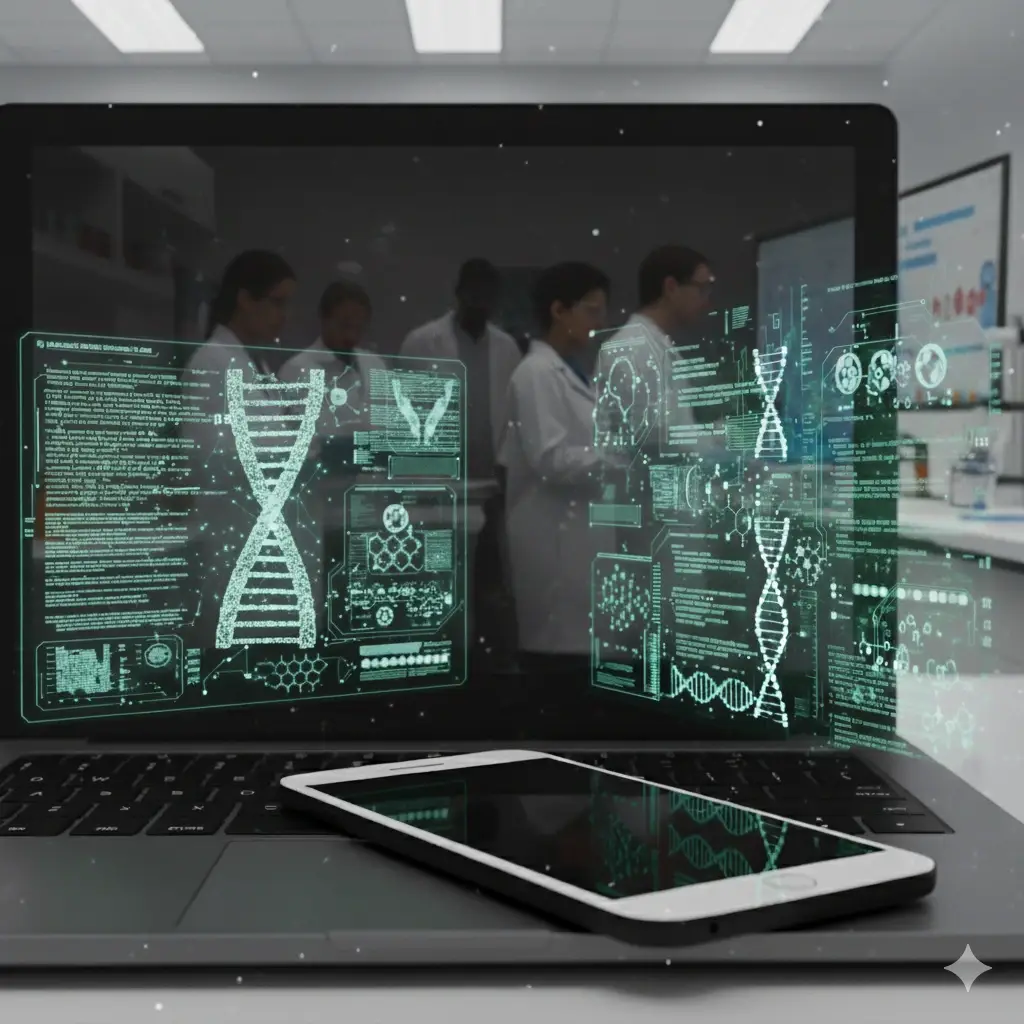
An ultra-modern, fully equipped laboratory with an open turned-off laptop displaying two inclined holograms showing 3D human DNA molecules in different vertical sizes and the other displaying a smaller horizontal 3D DNA model. These holograms also reveal varying degrees of complexity in human genetic codes, computational codes, graphs, and other crucial scientific data. A smartphone rests on the keyboard and adjacent areas of the laptop, capturing reflections from the laptop screen. In the background, a group of scientists— all wearing laboratory goggles— are present near a bench with scientific instruments. On the adjacent wall, an LED screen displays high-priority scientific data in vibrant colors against a white background. This team is at the cutting edge of personalized medicine, exploring how human genetic testing can enhance healthcare by tailoring treatments to individual genetic profiles. This approach is revolutionizing the way we manage health by identifying risks and optimizing disease prevention strategies, such as early cancer detection and personalized treatments for autoimmune diseases.
Conclusion
A DNA horoscope may seem futuristic but is based on real science. Genes give clues about health and risks, but genetics is only part of the story. Lifestyle and habits also matter.
DNA tests offer insights but aren’t perfect. Use them with healthy choices like nutrition, exercise, and stress management. Combining genetics with good habits helps you live healthier and longer.
Robotic medicine, though challenging, is vital for scientific progress. It enables precise research and advances treatments that benefit humanity.